our Bees
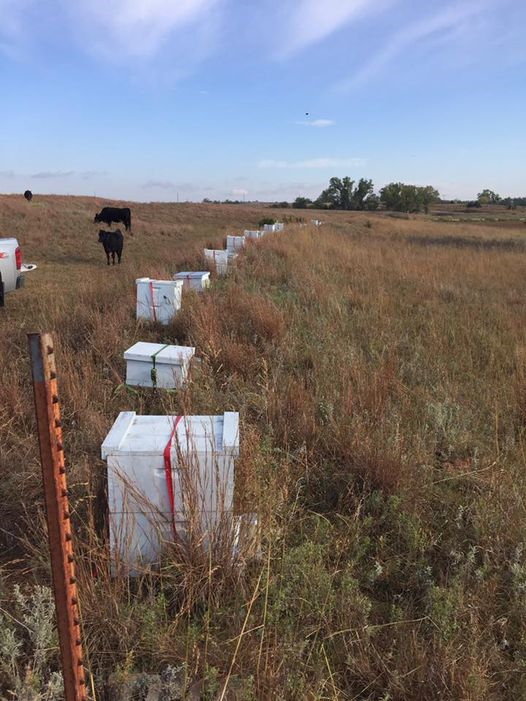
Spring Creek Bee Farm is located in Barber County, Kansas, about three miles west of Medicine Lodge. The apiary began in 2014, shortly after Brian and Lisa Withrow moved to Lisa’s family’s farm. Spring Creek operates a sustainable apiary. Our bees live their entire lives on the Kansas prairie. Our philosophy is simple – if it is good for the bees then it is good for us. We produce honey, beeswax and occasionally a few extra colonies.
Brian is a third generation beekeeper. He first learned to manage bees from his great grandfather Bura Parks Evans. Later his grandfather Frank “Red” Hudson managed a small hobby apiary and often let Brian tag along to help. Professionally, Brian is a Professor in the School of Criminal Justice and Criminology at Texas State University in San Marcos, Texas.
Lisa is a Barber county native and grew up on the farm where she and Brian now live. She is retired elementary school teacher and reading specialists. During her teaching career she specialized in literacy and reading instruction for at-risk and impoverished students. Today, she does a lot of volunteer work in her community and manages her family’s farming operations.
Brian and Lisa have four children and eight grandchildren. Their family is the central focus of their lives. At times the farm is quite busy with family activities and celebrations. Even the younger members help out during harvest and bottling.
Spring Creek manages Western honey bees (Apis mellifera). This type of bee is relatively gentle and produces a large amount of honey. Most beekeepers in North America manage the Western honey bee. Over the years we’ve focused on expanding the colonies that are more prolific in South Central Kansas. We call them ‘Kansas Mutts’. As a result our bees are more extreme temperature tolerant and strong foragers despite the windy Kansas plains.
We manage from four to six bee yards scattered in remote locations throughout Barber and Comanche counties. Our bees forage primarily on natural nectar sources (e.g. wildflowers and flowering trees) and well away from commercial cultivation. Various Integrated Pest Management (IPM) techniques are used to naturally protect our bees from environmental and natural threats. At harvest we always leave more than enough honey in each hive to insure the colony survives the cold Kansas winter, even if that means no surplus honey yield for us. If it is good for the bees then it is good for us.
Brian and Lisa Withrow
Medicine Lodge, Kansas